
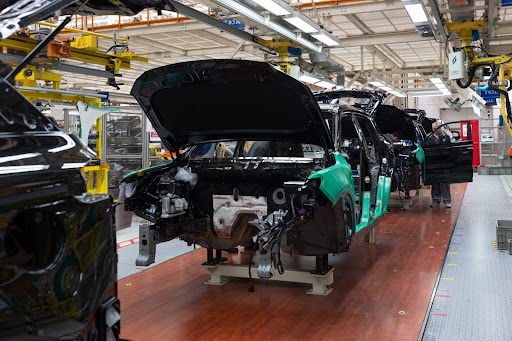
Chinese NEV manufacturers are rapidly evolving their international strategies by moving beyond simple exports toward localized production. A primary example is GAC Group’s collaboration with Magna International in Austria, where the Aion UT is set for a mid-March rollout. This shift highlights a sophisticated approach to integrating with European engineering and supply chain standards.
The Aion UT follows the Aion V as the second model produced at the Graz facility, signaling a deepened partnership. GAC executives emphasize that local manufacturing helps the company better understand European consumer needs while meeting strict regional standards. This “locally rooted” strategy is becoming a blueprint for Chinese firms seeking long-term global stability.
In 2025, China’s automotive exports surpassed 7 million units, with NEVs accounting for over 2.6 million of those vehicles. While growth is rapid, companies face challenges regarding overseas operational capacity and supply chain risks. To mitigate these, leaders like Chery’s Yin Tongyue advocate for creating local jobs and contributing to the economies of host nations.
Chery’s recent project in Spain has already generated over 1,500 jobs, proving that a sustainable business model is welcomed by local governments. The company plans to replicate this success in other regions during the 15th Five-Year Plan. By focusing on environmental sustainability and fair pricing, Chinese brands are attempting to build lasting trust abroad.
The next five years will be a test of how well these brands can navigate geopolitical complexities. Success will likely depend on their ability to transition from “Chinese exporters” to “global manufacturers.” Establishing a physical presence in key markets is now seen as the most viable path forward.