
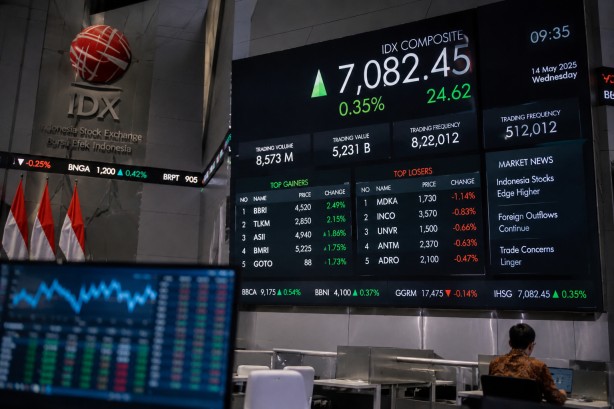
During the week ending July 24, Indonesia’s main stock index, the Jakarta Composite Index (JCI), registered a 0.34% increase, buoyed by enhanced trading activities. This rise came despite an ongoing trend of foreign investors withdrawing funds and growing concerns over global economic stability. The market capitalization of the Indonesia Stock Exchange climbed to Rp 10,870 trillion, with the average daily trading turnover witnessing a notable 41% jump to Rp 19.76 trillion. Nevertheless, foreign investors continued to be net sellers, with total outflows for the year reaching Rp 79.09 trillion, indicating persistent caution towards Indonesian assets.
Market participants have been navigating a complex landscape influenced by external pressures, particularly the rise in global oil prices, which was exacerbated by escalating tensions in the Middle East. Additional pressure came from new U.S. tariffs imposed on imports from several countries, including a 10% tariff on certain goods from Indonesia. These factors contributed to an environment of uncertainty, impacting investor sentiment across the region.
The Indonesian government, through its Finance Ministry, has acknowledged the challenges posed by higher oil prices, which could potentially strain the 2026 state budget. Despite these concerns, officials have maintained that the country’s fiscal position remains robust and stable. This assurance reflects a degree of confidence in the government’s ability to manage fiscal challenges amid a shifting global economic landscape.
As Indonesia navigates these external pressures, the financial markets continue to adjust to the evolving situation. The resilience shown by the JCI amid foreign outflows highlights the underlying strength of domestic trading activities, which are helping to counterbalance the impacts of global uncertainties. Observers will be watching closely to see how Indonesia’s fiscal strategies evolve in response to these ongoing challenges.