
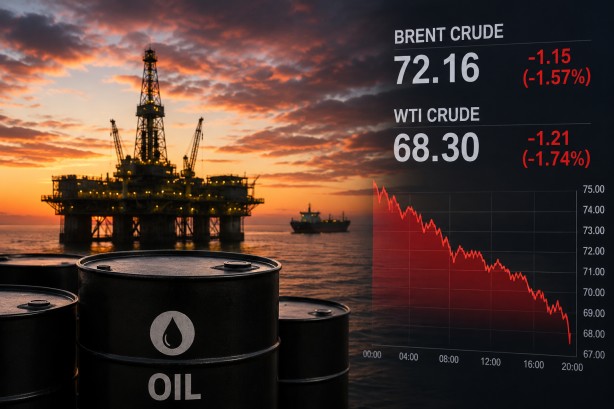
Oil prices experienced a slight decline on Thursday, attributed to profit-taking by investors and the ongoing assessment of escalating tensions between the United States and Iran. Brent crude saw a decrease of 0.52%, settling at $84.51 per barrel, while US West Texas Intermediate crude dipped 0.29% to $79.37 per barrel. Despite these decreases, both benchmarks remained near their highest levels in a month, maintaining the upward trajectory seen in recent weeks.
The market’s focus has shifted towards the potential for supply chain disruptions following recent US military actions against Iranian targets and Tehran’s retaliatory threats to limit regional energy exports. A particular area of concern is the Strait of Hormuz, a vital shipping channel that facilitates a substantial portion of the world’s oil and liquefied natural gas trade. Reports indicate a reduction in shipping activity through this passage amid the latest hostilities.
Geopolitical tensions are playing a significant role in sustaining elevated oil prices, with investors closely observing whether these conflicts could lead to significant interruptions in energy supply. Analysts have highlighted that the security of the Bab el-Mandeb Strait, another crucial corridor for energy transportation, is also under scrutiny, raising fears that regional allies might be drawn into the conflict.
Market experts caution that should tensions escalate further, oil prices could continue to rise if export routes face sustained disruptions. Conversely, if diplomatic efforts succeed in de-escalating the situation, there is potential for oil prices to decrease as the year progresses. The unfolding developments in the Middle East thus remain a critical factor influencing global energy markets.