
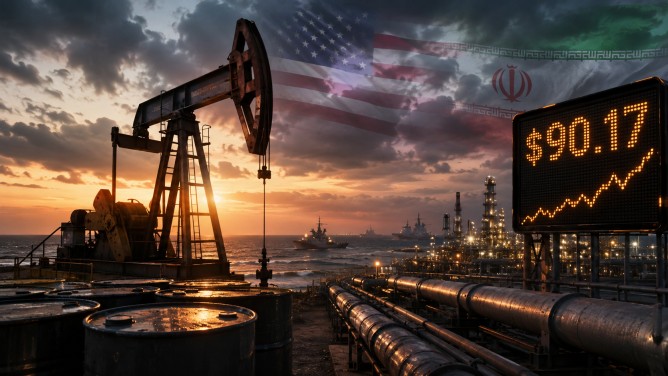
Oil prices have surged sharply following the conclusion of a two-month negotiation period between the United States and Iran, which ended without any peace agreement. This development has raised concerns about the continuation of the conflict and its potential impact on global energy supplies. Brent crude prices have climbed past the $90 mark, reaching approximately $91.63 per barrel, marking the highest levels since July 30.
The price increase follows a stern warning from US President Donald Trump, who demanded Iran’s surrender and cautioned about the possibility of escalating conflict if diplomatic efforts fail. The situation in the Middle East is further complicated by rising apprehensions about the Strait of Hormuz, a vital corridor for global oil shipments. The number of commercial vessels navigating this crucial waterway has decreased significantly, intensifying fears of prolonged supply disruptions.
Iran has signaled a potential shift towards a more aggressive military posture in the absence of successful negotiations. Recent reports of an attack on a cargo vessel traversing the Strait of Hormuz have exacerbated concerns regarding the security of maritime operations in the region. As tensions mount, investors are bracing for a potentially extended disruption in oil supplies, which could exert additional upward pressure on crude prices.
Analysts warn that the ongoing conflict in the Middle East, coupled with the persistent war in Ukraine, could deliver additional shocks to global energy markets. The combination of these geopolitical tensions poses a risk of driving oil and gas prices even higher, adding to the volatility faced by markets worldwide.