
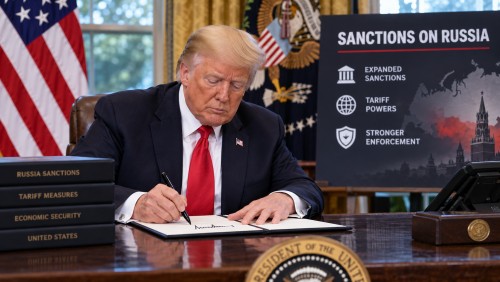
The recent expansion of U.S. sanctions against Russia could significantly impact global energy markets and the economies of major Russian energy importers, such as India and China. This development stems from a new law signed by U.S. President Donald Trump, which not only widens sanctions against Russia but also extends existing measures against Iran.
Under the new legislation, President Trump gains the authority to impose tariffs reaching up to 100% on countries that continue to purchase Russian energy. This aspect of the law is designed to restrict Russia’s ability to finance its war efforts by curbing revenue from oil and gas exports. The president also retains discretion over which countries might be targeted and whether certain sanctions could be waived, creating a dynamic landscape for international trade relations.
The bipartisan support for the bill in the House of Representatives highlights a unified stance against Russia’s activities, reflecting a broader strategy to pressure Moscow economically. The law targets Russian officials, financial networks, and other entities linked to the country’s military activities, reinforcing the U.S. commitment to curbing Russian influence.
By strengthening the sanctions framework, the U.S. aims to deter countries from engaging with Russia’s energy sector, potentially forcing them to seek alternative energy sources. This shift could have far-reaching effects on global energy distribution and geopolitical alliances, as nations reassess their energy dependencies in light of the U.S. policy.
The White House emphasized that the new law enhances sanctions and tariff authorities against Russia while maintaining pressure on Iran. As these measures are implemented, the international community will be closely monitoring the economic repercussions and the subsequent adjustments by countries heavily reliant on Russian energy imports.