
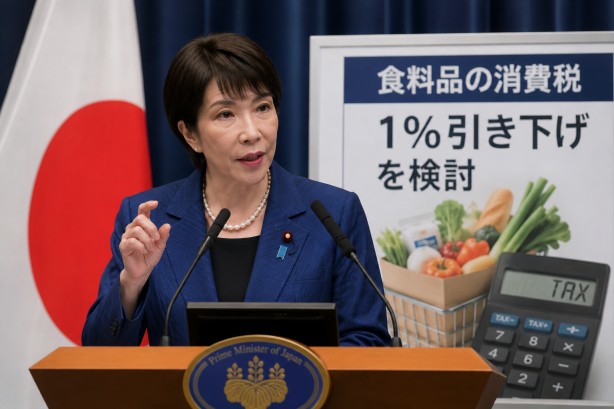
In a significant move aimed at alleviating the financial burden on households, Japanese Prime Minister Sanae Takaichi is poised to instruct the ruling Liberal Democratic Party to advance a plan to substantially lower the consumption tax on food items. The proposal suggests cutting the tax rate from the current 8% to a mere 1%, effective for two years starting in April 2027. This initiative comes as a response to ongoing stalemates in cross-party negotiations regarding tax reform.
The government’s strategy includes not only the consumption tax reduction but also direct financial assistance to support low- and middle-income households. Approximately ¥600 billion has been earmarked for this purpose, aiming to mitigate the rising cost-of-living challenges faced by many Japanese citizens. This dual approach underscores the administration’s commitment to providing both immediate relief through tax cuts and longer-term support via financial aid.
Efforts to finalize this policy are expected to conclude by early August, with plans to introduce the necessary legislative measures during an extraordinary parliamentary session later this year. This timeline is crucial to ensure that the new tax measures are implemented by April next year, aligning with the start of the fiscal calendar.
The decision to move forward with the temporary tax reduction highlights the government’s proactive approach in addressing economic pressures. By targeting food items, a staple expenditure for all households, the administration aims to deliver direct benefits to consumers and stimulate economic activity through increased spending power.
As discussions continue, the ruling coalition remains focused on overcoming the current impasse in tax reform talks. The proposed measures reflect a concerted effort to balance fiscal responsibility with the urgent need to support vulnerable segments of the population, ultimately aiming to foster a more resilient and equitable economic environment.