
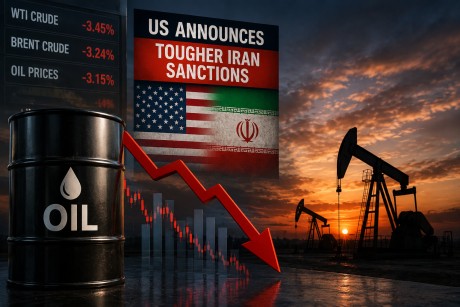
Oil prices experienced a significant drop of over 3% on Tuesday, reaching their lowest levels in a week, as investors weighed the implications of fresh US sanctions directed at Iran. The global oil benchmark, Brent crude, saw a decrease of 3.1%, bringing it down to $89.31 per barrel. Similarly, West Texas Intermediate (WTI) fell by 3.34%, settling at $82.17. This decline followed a period of strong gains the previous week, where Brent saw an increase of 6.6% and WTI rose by 5.7%.
The newly imposed sanctions by the United States target businesses and countries engaged in economic activities with Iran, aiming to ramp up pressure on Tehran amid ongoing tensions. The sanctions are part of Washington’s strategy to disrupt the Iranian economy further.
The oil markets remain highly responsive to developments in the Strait of Hormuz, a crucial artery for global energy supplies. Iranian authorities have cautioned that they might halt oil exports through this vital waterway if the US intensifies its pressure. This potential threat underscores the strategic importance of the Strait of Hormuz, heightening concerns over regional stability.
Adding to the geopolitical tension, there have been increased shipping risks. A recent incident involved a tanker reportedly being struck near Oman’s Musandam peninsula, while ongoing attacks in the Red Sea have further contributed to the uncertainty surrounding global energy supplies. These developments come at a time when the market is already jittery about potential supply disruptions.
Despite these geopolitical risks, oil prices have fallen as traders concentrate on the potential ramifications of the new US sanctions and debate whether they might lead to substantial reductions in Iranian oil exports. The market appears focused on evaluating the broader impact of these measures on the global oil supply and demand dynamics.