
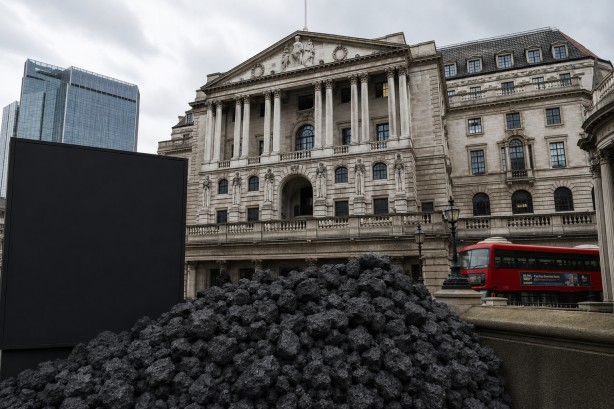
In a noteworthy move to address climate-related financial challenges, the Bank of England has declared that starting October, it will cease accepting bonds connected to thermal coal companies as collateral in its lending operations. This decision marks a substantial effort to mitigate the financial risks associated with climate change.
Traditionally, commercial banks, including major financial institutions, rely on bonds as collateral when borrowing from the central bank to facilitate daily operations and transaction settlements. However, with the new policy in place, bonds linked to thermal coal, a fossil fuel predominantly used in power plants for electricity generation, will no longer qualify as acceptable collateral.
The central bank highlighted that companies engaged in the thermal coal industry are increasingly susceptible to financial risks as nations worldwide hasten their shift towards cleaner energy sources and strive for net-zero emissions targets. Consequently, assets tied to coal could depreciate in value over time, prompting the central bank to adapt its policy accordingly.
Additionally, the Bank of England’s policy includes the potential application of discounts on bonds from other sectors that are vulnerable to climate-related risks, aiming to safeguard its balance sheet against prospective losses. This initiative has been positively received by environmental groups, who believe it sends a powerful message to financial markets and could incentivize commercial banks to further distance themselves from industries known for high pollution levels. Currently, over 150 major financial institutions globally have already implemented restrictions on business activities linked to the thermal coal sector.
Analysts caution, however, that the success of this policy will largely depend on the methodologies employed to assess climate risks and whether similar measures will be extended to other environmentally detrimental activities moving forward. The decision by the Bank of England is a crucial step, but its true impact will be measured by the broader adoption of climate-conscious financial policies across different sectors.