
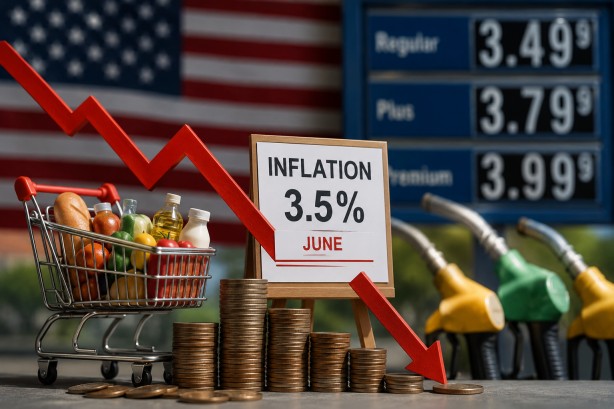
The United States witnessed a slowing annual inflation rate in June, registering at 3.5%, primarily due to a temporary dip in energy prices that eased overall consumer expenses. This development, highlighted in the recent Consumer Price Index (CPI) data, marks a significant departure from the higher inflation levels seen in preceding months. Notably, consumer prices fell by 0.8% compared to May, with the decline in gasoline and fuel prices playing a substantial role in counterbalancing the increases observed in food, housing, utilities, and other daily necessities.
Core inflation, which is a critical figure for the Federal Reserve as it strips out the volatile food and energy sectors, has also shown a downward trend, reaching 2.6% on an annual basis. This indicator is closely watched by policymakers to gauge the underlying inflationary pressures without the noise of fluctuating energy and food prices. However, despite the recent easing of inflationary pressure, experts caution that this trend might not persist due to escalating tensions in the Middle East that have already caused a resurgence in global oil prices.
The impact of rising crude oil prices has begun to surface, with consumers facing higher fuel costs and industries such as aviation and transportation grappling with increased operational expenses. This renewed upward pressure on energy prices poses a potential challenge to the recent inflationary relief experienced by consumers and could influence future economic conditions.
As the Federal Reserve prepares for its policy meeting later this month, it is expected to carefully evaluate the latest inflation data alongside the current state of the labor market. Although there has been a moderation in inflation, it remains above the Federal Reserve’s long-term target of 2%, creating uncertainty about when the central bank might adjust interest rates. The decision-making process will likely weigh these inflation trends against broader economic indicators to determine the appropriate timing for any future monetary policy changes.